
Kilworth Hills
1 score
-
Kilworth HillsBagpipe
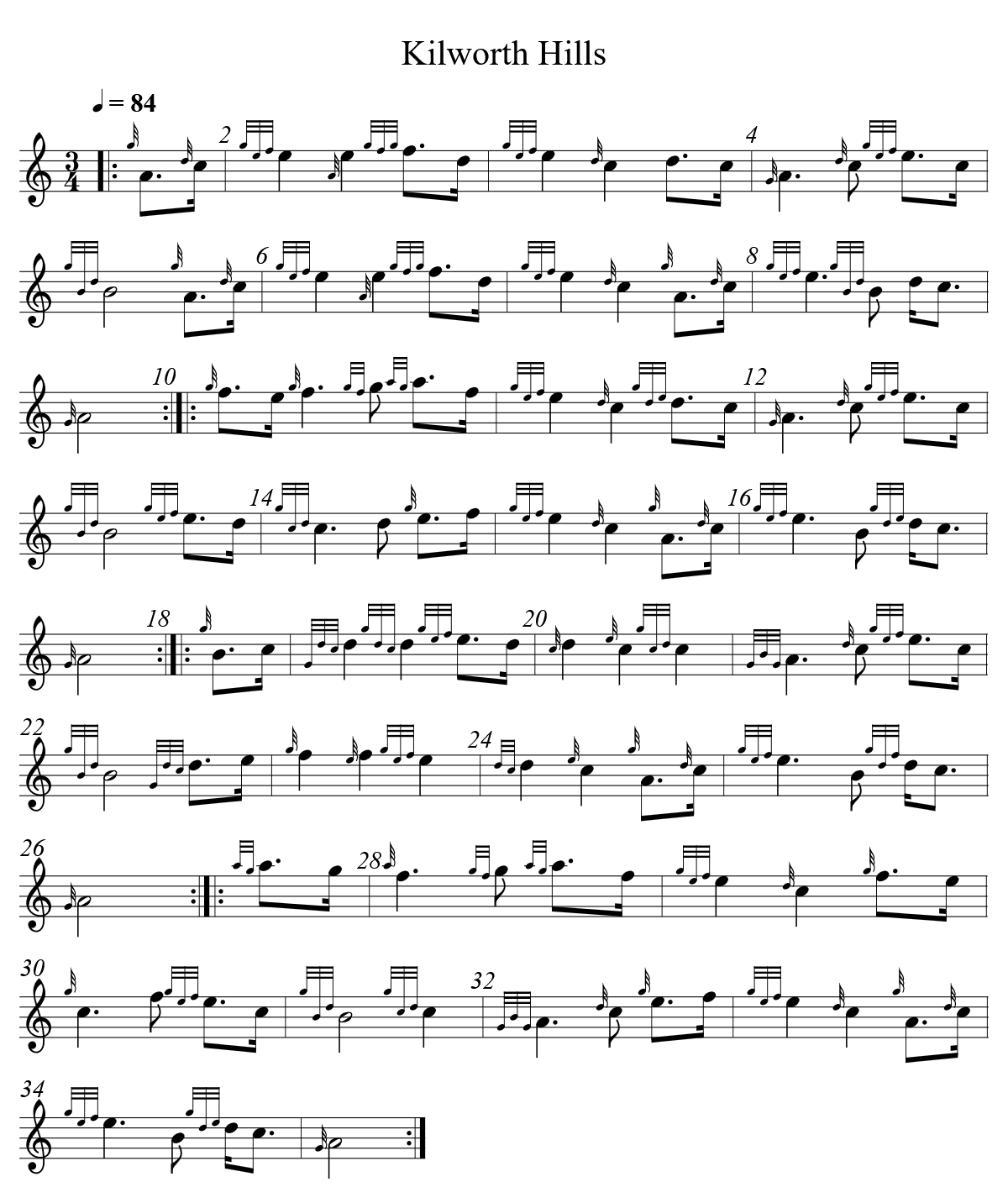
Kilworth Hills is a traditional air of Irish origin, generally classed among the reels of the session repertoire. Like many pieces from the oral tradition, it exists in several variants and has passed between musicians without any single clearly established attribution. The title refers to the hills of Kilworth (Kilworth Hills), an area in County Cork, Ireland, grounding the piece in the rural, landscape-inspired imagery so typical of Irish tunes.
The general public may not know Kilworth Hills by name, but it is one of those reels regularly found in Celtic music compilations, folk concerts and pub sessions. Its fluid melodic structure and driving character make it a favourite with musicians and dancers alike, often used to build energetic sets.
In Irish sessions, Kilworth Hills is played on fiddle, tin whistle, flute, accordion, banjo or guitar. It fits squarely within the tradition of fast 4/4 reels, designed to keep the dancing going and sustain energy and momentum through a set. Like many reels, it is often run together with other stylistically similar tunes to maintain the pace and intensity.
In larger Celtic ensembles, the piece can be adapted for bagpipes and full orchestrated formations. Bagadoù sometimes include it in Irish suites, where bombardes, bagpipes and percussion give it a much weightier sonic presence while preserving its dance-like character. On the Great Highland Bagpipe, it becomes more percussive and even-footed, well suited to quick marches and pipe band displays.